Agentic AI for manufacturing operations
Stop losing context between shifts and maintenance.
One of the most practical AI in manufacturing use cases is a maintenance request that should not stall because the next person lacks context. Use Canvas to plan a clearer handoff: the records needed, the responsible owner and the supervisor decision before work begins.
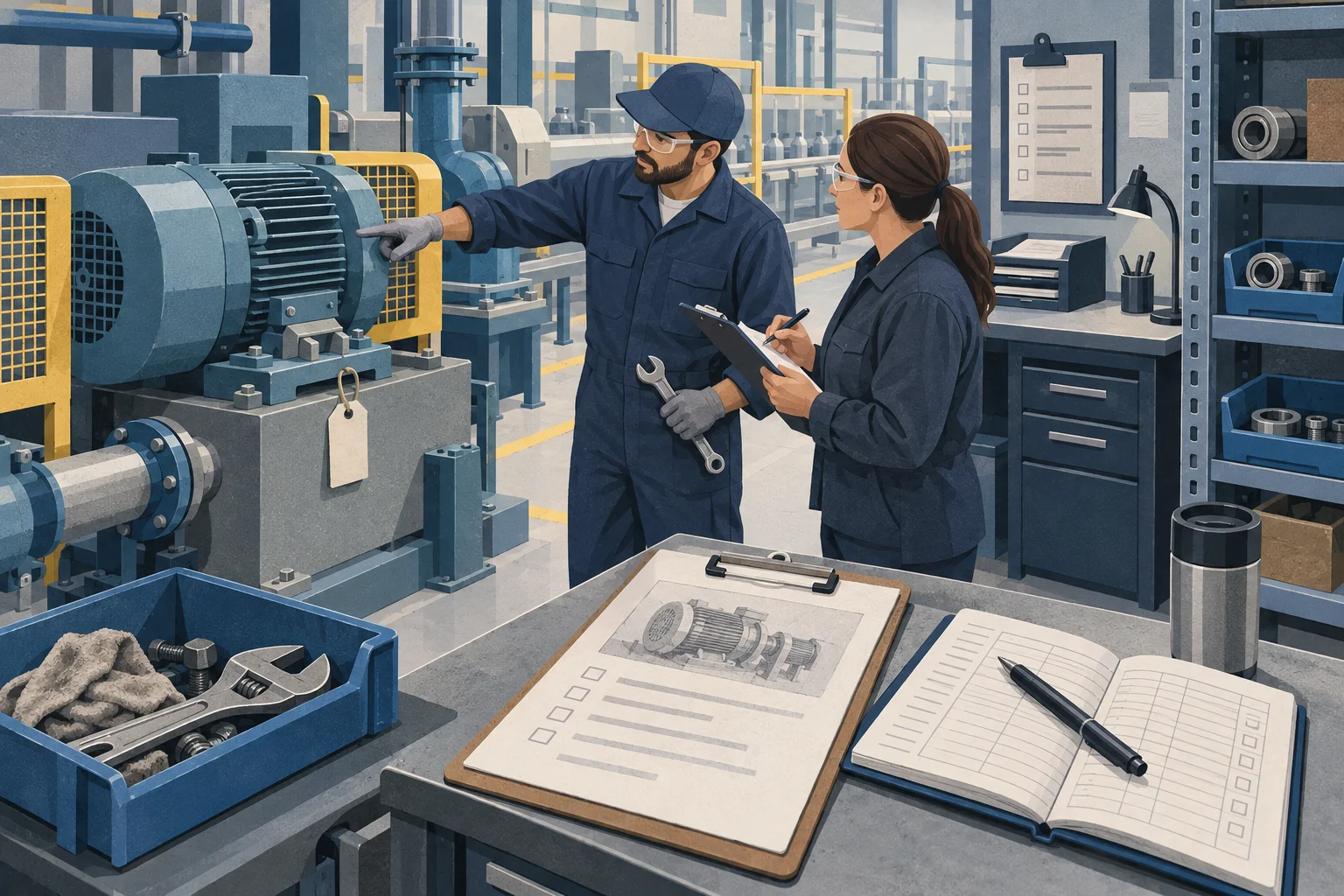
Illustrative workflow to plan
A small first version. A clear human decision.
Select a step to follow the handoff. People keep the decisions marked for human review.
Capture the request
Describe the asset, issue and missing fields.
Plan the evidence and ownership for this handoff.
Example: flag a missing asset identifier and prepare a maintenance-request summary for a supervisor. Equipment operation and work authorization stay with established human processes. Canvas plans the workflow; it does not read your CMMS or ERP, predict failures or control machinery.
Find the handoff that loses the shift.
Shift notes, asset records, work orders and parts checks can tell different stories. Start with one repeatable handoff problem. Identify where information goes missing before deciding whether AI is the useful next step.
Research context: NIST identifies matching analytics tools to manufacturing objectives and integrating data acquisition with decision support as challenges. This supports examining the whole information path; it is analytics research, not evidence that an agent or Canvas will improve a factory.
NIST: Data Analytics for Smart Manufacturing SystemsBring the evidence behind the idea.
- Describe one maintenance-request path across shifts, including the person accountable at each handoff.
- Identify where asset identifiers, work orders and parts availability live, and who can confirm their reliability.
- Use a sanitized example of a delayed request to separate missing information from capacity or scheduling constraints.
- Capture the previous automation attempt, if any: integration gaps, operator friction and what is different now.
Turn discovery into a reviewable plan.
Build an operating model that maintenance, operations and delivery teams can challenge together. Review readiness gaps, then use a diagram and blueprint to agree system boundaries and responsibilities before implementation.
Define what would make it worthwhile.
Track time to an accepted handoff, missing fields and supervisor review effort. Separate those measures from downtime. Include access, integration and training costs, then define a pilot across relevant shifts and request types.
Your first conversation
Start with a brief like this.
We want to explore AI assistance for maintenance-request handoffs at one site. Requests often lack asset context, and a supervisor must approve the next action. Help us map the records, shift responsibilities and unknowns, and define a first version that prepares a reviewable summary without controlling equipment.
Adapt this example and bring it to the home-page conversation. The button opens the home page; it does not fill in the brief.
Start planningBefore you start
Is this predictive maintenance software?
No. Canvas helps plan an opportunity and expose the evidence it needs. A predictive-maintenance proposal would still need suitable data, specialist validation and a separately implemented system.
Can we start without connected factory data?
Yes: describe the process, systems and known gaps. Be explicit about what remains unverified. That is enough to begin discovery, but not enough to claim that a production workflow is ready.
Who should review the plan?
Include someone who performs the handoff, the maintenance or operations owner, and the people responsible for system access and site controls. A polished diagram cannot substitute for their review of real constraints.
What are practical AI in manufacturing use cases?
This page plans one: a maintenance-request handoff, where the records, owner and supervisor decision are made clear before work begins. It is deliberately not predictive maintenance, which would need suitable data and specialist validation.