AI planning for the work you know
Where to start with agentic AI in your company.
Not sure where to start with agentic AI in your company? These agentic AI use cases begin with a slow handoff, a stalled pilot or rules nobody has made concrete. Start with the problem your team knows, and use Canvas to turn it into a plan you can review together.
Choose an industry, a journey across departments or a starting point. Each example names evidence and human decisions. These are planning examples, not installed automations or customer results.
By industry

Customer service
Help your support team reach the right answer sooner.
Agentic AI customer service planning: map trusted knowledge, response drafts and human escalation, with the evidence and value assumptions, before you build.
See this example
Manufacturing operations
Stop losing context between shifts and maintenance.
AI in manufacturing use cases start with a handoff: plan maintenance context, supervisor decisions and evidence before a build. Not predictive maintenance.
See this example
Professional services
Give delivery a clear brief, not a pile of notes.
AI use cases in professional services: plan how client intake becomes a project brief, who reviews scope and commitments, and what evidence backs the value.
See this example
Banking
Less chasing documents. A clearer banking handoff.
Agentic AI in banking use cases: map a service-request handoff, document checks and staff review into a plan with clear ownership, evidence and limits.
See this example
Healthcare
Give the next team a referral they can work with.
AI in healthcare administration, planned with care: map the referral handoff, flag missing information and keep care decisions with people. Not a clinical tool.
See this exampleAcross departments
Order to cash
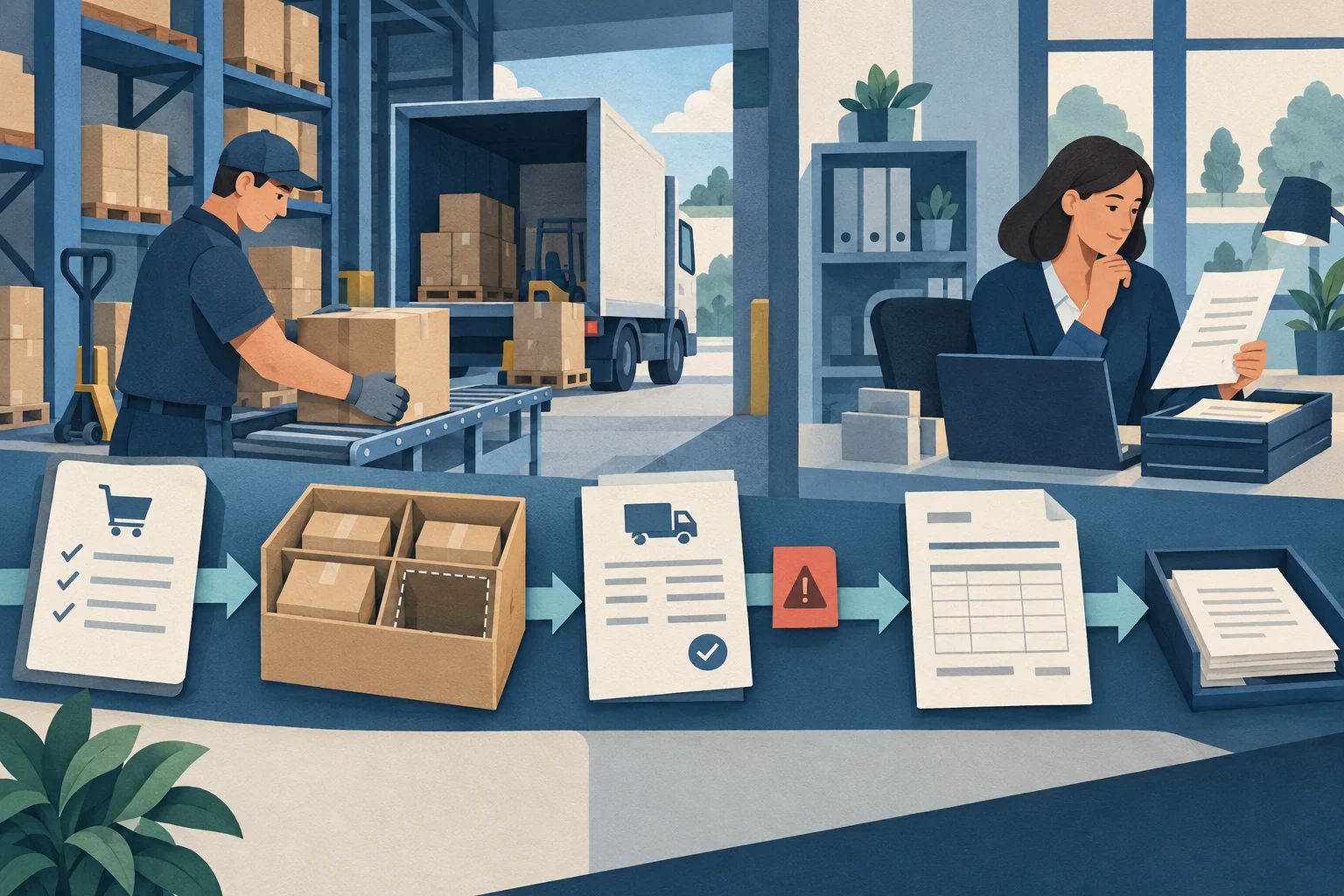
One order. Five teams. A shared plan.
AI order to cash automation starts with the handoffs: map sales, order ops, fulfilment, finance and support, exception owners and a staged pilot to test first.
See this example
Supplier onboarding
Bring a supplier in with every owner in view.
AI supplier onboarding automation, planned first: map procurement, legal, security, finance and master-data checks and keep human approval at each gate.
See this exampleBy starting point
AI governance
Know who can say yes before an agent can act.
Agentic AI governance, made concrete: define evidence, decision owners, escalation and approval gates before an agent can act. Plan the human control first.
See this example
Restarting an AI attempt
Your first attempt taught you something. Use it.
Restart a stalled AI pilot with evidence: map what failed, what changed and the smaller next step to test before you rebuild. A recovery plan, not a new model.
See this exampleQuestions about where to start
Where should a company start with agentic AI?
With one slow handoff, one stalled pilot or one set of rules nobody has made concrete. Pick a task with a clear owner and a number you already track, and plan it before choosing a tool. The examples below each start from a situation like that.
Which workflow is best for a first AI project?
A repetitive task with a clear correct answer, low-risk actions and one accountable owner. The first project as a handoff is a useful frame, and the validation guide shows how to test the choice before you build.
Do I need clean data before I start?
Not to begin planning. Describe the process and mark what is unknown. Whether data is ready is one of the questions the readiness checklist asks, and a gap there is a finding to assign, not a reason to stop.
Are these customer results?
No. They are planning examples, not installed automations or customer case studies. Each shows how a team could structure the evidence, owners and human decisions before building.
Check a first project with the agentic AI readiness checklist, then write it down with the agentic AI implementation plan. The first AI project is a handoff explains why the first choice matters, and the planning framework covers the full path to production.
Have a different workflow in mind?
Describe the bottleneck, who owns the work and what a better outcome would look like. Canvas helps expose the unknowns and prepare a connected plan. Your team reviews it before implementation.
Read the idea-validation guide or learn who builds Canvas. See where Canvas fits and explore the missing middle.